
The past few weeks...
...have been some of the most terrifying and challenging of our lives as new parents. Our sweet boy, Beau, has been battling something that took us weeks to get an answer for—a diagnosis that would ultimately lead to emergency surgery at just 5 weeks old. I want to share our experience not only to document it but also to raise awareness for other parents who may find themselves in a similar situation.
The Start of Something We Couldn’t Explain
When Beau was just two weeks old, he started having what I could only describe as “episodes.” Out of nowhere, he would start silently choking—his face showing a look of distress like he wasn’t getting enough air or was about to vomit, but nothing would come up right away. It was terrifying. The first two episodes were a couple of days apart, and after the second one, we knew we couldn’t just brush it off. We rushed him to the ER—a nerve-wracking decision as new parents, knowing we were exposing our tiny newborn to a hospital full of illness.
At the ER, they ran nearly every test they could think of. Blood work, X-rays, ultrasounds—everything came back inconclusive. Finally, they labeled what he was experiencing as BRUEs—Brief Resolved Unexplained Events—which, as the name suggests, gave us no real answers. Each time, we had to intervene with back pats and even chest compressions to get him to come out of it, often resulting in him vomiting afterward. Something was blocking something, but what?

The Process of Elimination Begins
Since no clear medical explanation was given, we started experimenting ourselves, trying to pinpoint what was causing his distress.
- Step One: We suspected his formula, so we switched to exclusive breastfeeding. But within two days, he had two more BRUEs.
- Step Two: We did the opposite—cut breastfeeding completely and switched to formula only. At first, we thought we saw some improvement, but then the vomiting continued.
- Step Three: At his pediatrician appointment, we shared all our concerns. We learned that Beau was losing weight and wasn’t taking in enough volume per feeding. But we couldn’t force him to eat more—he would stop drinking halfway through his bottle, exhausted. The doctor suggested we evaluate his bottles and nipple sizes.
At that time, we were using a mix of Avent glass bottles and Dr. Brown’s glass bottles, both with size 1 nipples. She advised us to use only the Dr. Brown’s bottles for 24 hours and then come back in a week.
That 24-hour period turned out to be the worst 24 hours Beau had experienced yet. He was vomiting even more, and during the night, his oxygen levels dropped. Thankfully, we had his Owlet monitor on him, which alerted us. That alarm might have saved his life.
- Step Four: We switched back to only Avent bottles, thinking that would help. The vomiting slowed, but he was still eating less than before. Every night, he would vomit at least once, sometimes twice—once right after being laid down and another time in the middle of the night.
- Step Five: His acne flared up badly, making us consider a possible dairy/lactose intolerance. In desperation, we switched to a dairy-free formula. Within 24 hours, his baby acne completely cleared up, which felt like a breakthrough. But then, just as quickly as our hope returned, it faded—because the vomiting didn’t stop.
At his follow-up appointment yesterday, we learned that despite all of our efforts, Beau was still slowly losing weight. It was devastating.


The Answer We Had Been Searching For
Then, we were introduced to something called a bottle/nipple flow chart (reference photo at end of blog)—which showed that the Avent bottle and nipple combination we had been using barely allowed any milk to come out. Beau wasn’t quitting his feeds early because he wasn’t hungry—he was simply exhausted from working so hard to get milk out.
Our pediatrician immediately recommended switching to a size 3 nipple to allow for better milk flow. She also ordered a STAT abdominal ultrasound to check for a condition called Pyloric Stenosis.
Beau had two feeds with the new nipple size before we went in for the scan. Both times, he projectile vomited. That’s when I knew.
Diagnosis: Pyloric Stenosis
At 3 PM, the ultrasound confirmed our fear: Beau had Pyloric Stenosis—a condition where the pylorus (the muscle between the stomach and small intestine) thickens and blocks food from passing through. In Beau’s case, his pylorus was both thicker and longer than normal, making it nearly impossible for his stomach to empty properly. No matter what we fed him, his body physically couldn’t digest it.
Then, we were hit with the next wave of fear: Beau would need emergency surgery. That same day.

Surgery at 5 Weeks Old
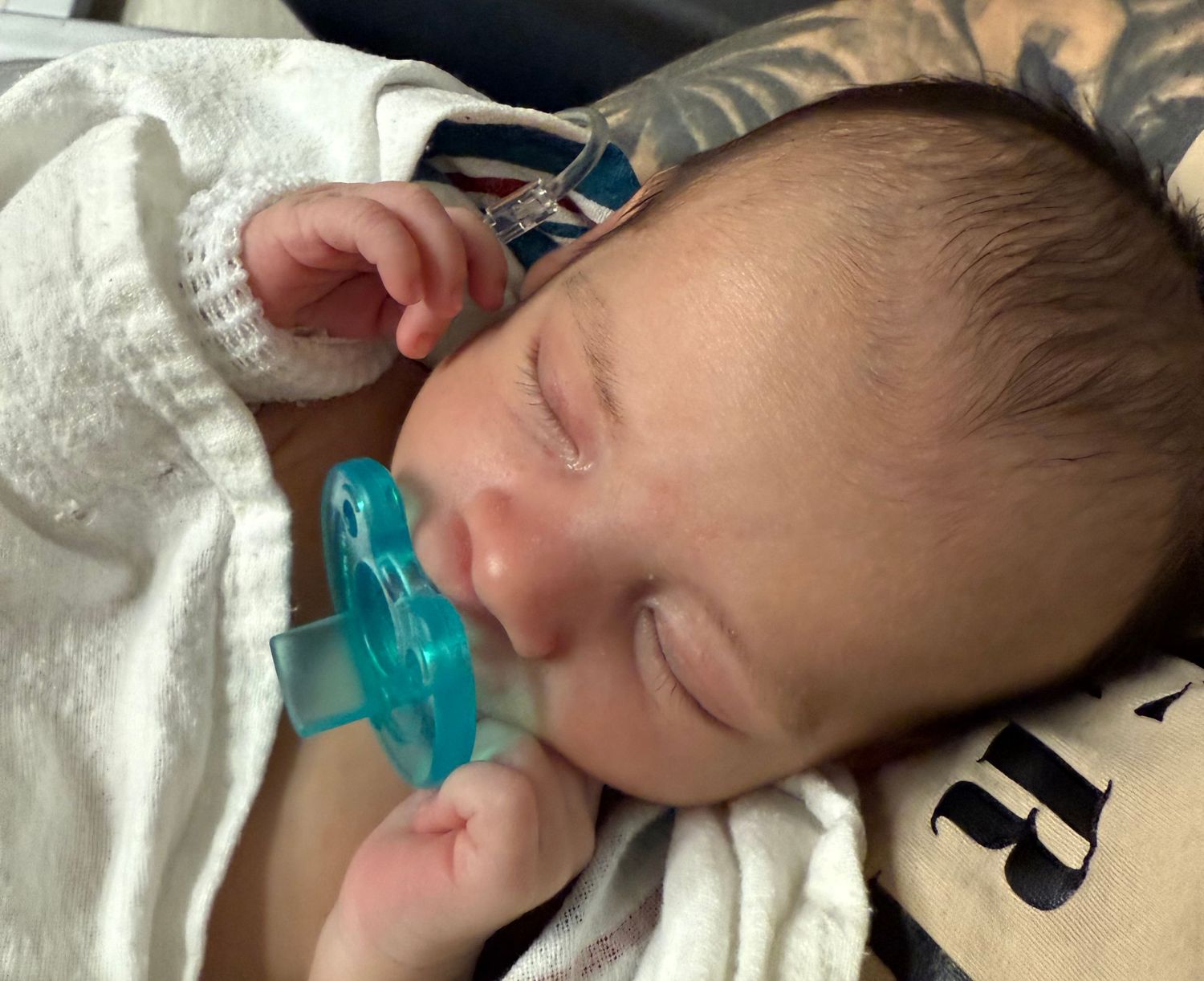
We were immediately admitted to the children’s hospital, and at 9 PM, our tiny 5-week-old baby was taken into surgery. They performed a pyloromyotomy—a procedure where the surgeon makes a small incision in the thickened pylorus muscle to allow food to pass through normally.
By 10 PM, he was out of surgery and in recovery.
We spent the night in the hospital, overwhelmed but relieved. I couldn’t believe everything we had been through to get to this point. But most of all, I felt proud that we never stopped advocating for our baby. We tracked every single feeding, every diaper, every episode. We watched him slowly worsen, but we never stopped fighting for answers.
A New Beginning
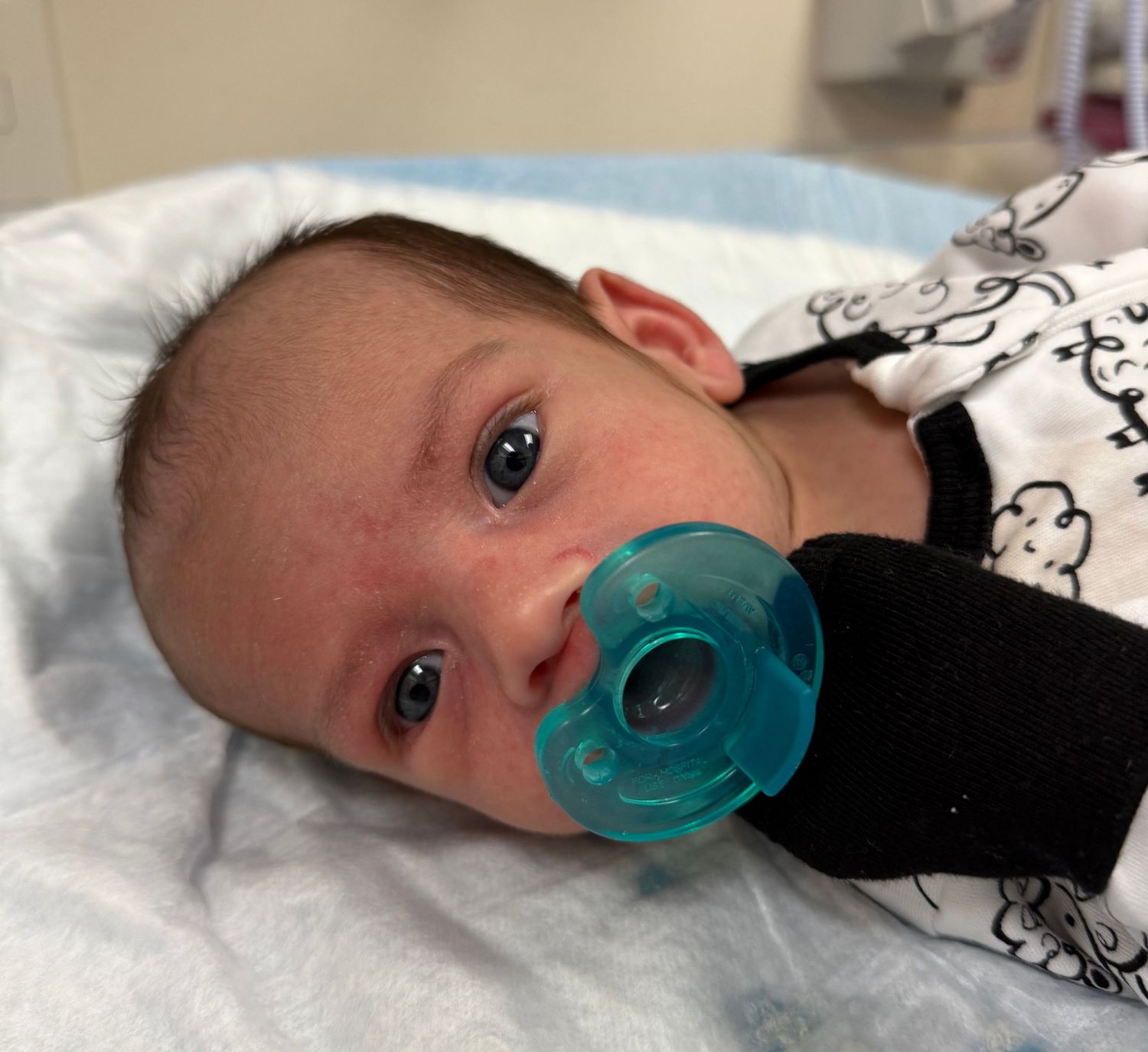
This morning, Beau has already had a few feeds—and for the first time, he is taking in the volume required. No vomiting.
For weeks, I couldn’t put him down—he would only nap in my arms while slightly elevated. If I tried to lay him flat, he would immediately wake up and refuse to sleep. I now realize that was likely because he was uncomfortable—he physically couldn’t digest his food, and that was his way of telling us.
Now, for the first time, I feel like my baby is finally getting the relief he’s needed all along.
Why I’m Sharing This
I share our story for awareness.
Pyloric Stenosis is not rare—it affects about 3 in 1,000 babies, with boys being more commonly affected than girls. Yet, it can be hard to diagnose because symptoms can mimic reflux or feeding issues.
If your baby is experiencing:
Frequent projectile vomiting (especially after every meal)
Difficulty gaining weight or weight loss
Seeming hungry but stopping feeds early
Less frequent bowel movements or dehydration
Discomfort when laying flat
Please push for an abdominal ultrasound. Trust your instincts. Keep track of everything. Advocate for your baby.
Beau’s journey to healing is just beginning, but we are so thankful to finally have the answers we fought for.
💙 To every new parent navigating the unknown—you are not alone. 💙